What Homeowners Should Know About a Property Easement
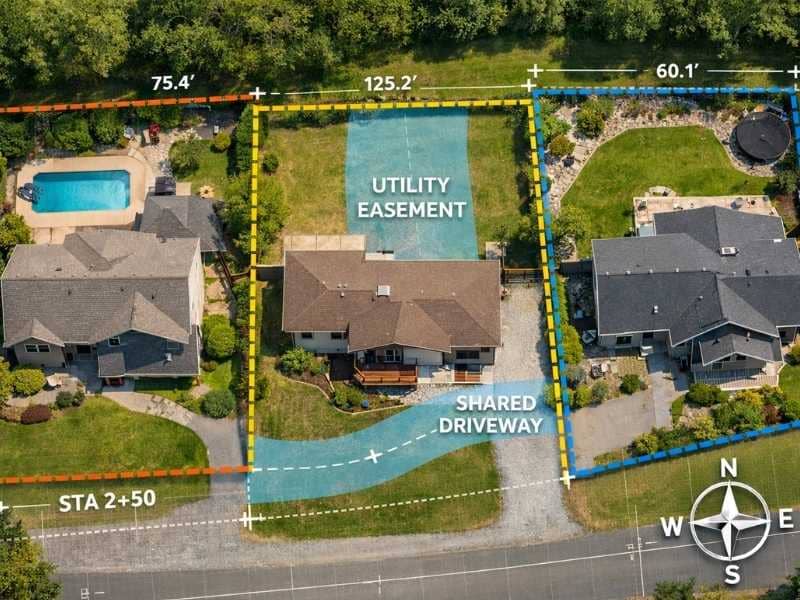
A property easement is a legal right that allows another person, company, or government agency to use a specific part of your land for a set purpose. You still own the land, but you cannot always control how that portion is used. Easements are legally binding, they stay with the property when it is sold, and they can affect what you are allowed to build or change on your land.
What Is a Property Easement?
A property easement is a non-ownership legal right to use part of someone else’s land. The person who holds the easement does not own the land. They simply have permission to use a defined portion of it for a specific reason. That right is recorded in public records and passes to the next owner when the property is sold.
Easements are more common than most homeowners realize. According to the American Land Title Association, easements appear in millions of real estate transactions every year and are among the top five issues found during property title searches. In the United States, utility easements alone affect an estimated 60 to 70 percent of all residential properties.
It is important to understand that an easement does not give anyone ownership of your land. It only grants permission to use a specific area for a specific purpose. If you sell your home, the easement stays in place for the next owner. The new buyer inherits both the property and any easements attached to it.
Easements matter because they can affect:
- What you are allowed to build or plant on part of your land
- Whether a utility company can enter your property without asking
- How much a buyer may be willing to pay for your home
- Whether a sale can go through without legal complications
Common Types of Property Easements
The most common types of property easements are utility easements, access easements, drainage easements, conservation easements, prescriptive easements, and easements by necessity. Each type serves a different purpose and comes with different rules about what the easement holder is allowed to do.
Utility Easements
Utility easements give electric, gas, water, sewer, and cable companies the right to install and maintain their lines and equipment on your property. These are the most common type of easement in the country.
- They typically run along the rear or side of a residential lot.
- You cannot build a permanent structure, such as a shed or garage, directly over a utility easement.
- The utility company has the right to enter, dig, and do maintenance work without needing your permission first.
Access Easements
An access easement gives a neighboring property owner or the public the right to cross your land to reach another location. This is also called a right-of-way easement.
- These are common in rural areas where one property has no direct access to a public road.
- A shared driveway between two homes is a familiar example.
- The terms of the easement spell out how the access can be used and who is responsible for upkeep.
Drainage Easements
A drainage easement allows water to flow across your property through a natural or constructed channel.
- You will often find these near low-lying areas, creeks, or retention ponds.
- Local governments frequently require drainage easements when new neighborhoods or roads are built.
- You cannot block or redirect the water flow within the easement area.
Conservation Easements
A conservation easement is a voluntary agreement between a landowner and a land trust or government agency to protect the land from certain types of development.
- The landowner keeps ownership but agrees to limit what can be built on the land.
- The IRS allows tax deductions for conservation easements, in some cases up to 50 percent of adjusted gross income.
- These easements are permanent and will apply to every future owner of the property.
Prescriptive Easements
A prescriptive easement forms when someone has used a portion of your land openly, continuously, and without your permission for a period defined by state law, often between 10 and 20 years.
- This type is similar to adverse possession but does not transfer ownership.
- Posting “No Trespassing” signs or physically blocking access can prevent a prescriptive easement from forming.
Easements by Necessity
A court can grant an easement by necessity when a property has no legal way to reach a public road.
- This can happen when a parcel is created without its own road access.
- Courts may impose this easement even if the neighboring landowner objects.
How Easements Are Created
Easements are created through written agreements, court orders, long-term use, or legal necessity. Any formal easement must be recorded with the county to be enforceable against future buyers.
The four main ways an easement is created:
- Express grant. Both parties sign a written agreement, which is then recorded with the county clerk.
- Reservation. A seller keeps an easement over land they are transferring to a buyer.
- Prescription. Long-term, open use of another person’s land without permission creates an easement by law.
- Necessity. A court orders an easement when a property cannot be reached any other way.
How an Easement Can Affect Your Property Value
Easements can reduce a home’s market value by 5 to 40 percent, depending on the type and location. Small utility easements along the rear of a lot usually have little impact. Larger access or conservation easements that limit what you can build may lower the value significantly.
The Appraisal Institute requires licensed appraisers to factor easements into their market value assessments. Here is a general guide to how different types affect value:
| Easement Type | Estimated Value Impact |
| Utility easement along rear or side | Minimal, up to 5 percent reduction |
| Access or right-of-way easement | 5 to 20 percent reduction |
| Drainage easement over buildable area | 5 to 15 percent reduction |
| Conservation easement | 20 to 40 percent reduction |
If you are buying a property, always ask whether any easements exist before making an offer. The presence of an easement is not always a dealbreaker, but you should know what you are agreeing to before you sign.
How to Find Out If Your Property Has an Easement
You can find out if your property has an easement by reviewing your deed, checking your title insurance policy, searching county land records, or hiring a licensed land surveyor to conduct a boundary or ALTA survey. Easements are recorded in public records and will appear on a professional survey.
Steps to check for easements on your property:
- Read your property deed. Easements are often described in the legal description section near the back of the document.
- Review your title insurance policy. Your title policy lists all known easements that existed at the time of purchase.
- Search county records. Most county clerk or recorder offices have searchable online databases. You can look up your parcel by address or parcel number.
- Request an ALTA survey. This is the most thorough survey type and is required to reveal all recorded and visible easements on a property.
- Hire a licensed land surveyor. A surveyor will physically locate easements on the ground and mark them on a legal map of your property.
If you are buying a home, request a survey before closing. A standard title search alone may not catch every easement, especially older ones that were never formally recorded.
Can an Easement Be Removed?
Yes, an easement can be removed, but doing so is a legal process. The most common methods are a written release from the easement holder, a merger of both properties under the same owner, abandonment, expiration, or a court order. Any removal must be recorded with the county to be legally effective.
Here is how each method works:
- Written release. The easement holder signs a formal agreement giving up their rights. Both parties must record the release with the county.
- Merger. If the same person comes to own both the property with the easement and the property that benefits from it, the easement ends automatically.
- Abandonment. If the easement holder stops using it and clearly shows they have no intention of using it again, a court may find it abandoned.
- Expiration. Some easements are created with an end date. Once that date passes, the easement is no longer valid.
- Court order. If an easement is being used beyond what it was intended for, a court can modify or terminate it entirely.
Removing an easement always requires updating the property deed and filing the change with your county recorder’s office. Consulting a real estate attorney is strongly recommended before starting this process.
Frequently Asked Questions
Does an easement give someone the right to own my land?
No. An easement is only a right to use a specific portion of your land for a defined purpose. Full ownership stays with you. The easement holder cannot sell the land, transfer title, or build permanent structures in the easement area unless the original agreement specifically allows for it.
Do I have to tell a buyer about an easement when selling my home?
Yes. Most states require sellers to disclose all known easements as part of the property disclosure process. Failing to disclose can create legal liability after the sale is completed.
Can I put a fence on part of my property that has an easement?
It depends on the type of easement. Utility easements usually prohibit any permanent structure, including fences. Some access easements permit a fence with a gate. Always read the original easement document carefully and speak with a licensed surveyor or real estate attorney before building near an easement area.
Who takes care of the land within an easement?
This depends on the terms of the easement. Utility companies maintain their own infrastructure within utility easements. For shared access easements, maintenance responsibilities are usually spelled out in the agreement. When nothing is written down, disputes over upkeep are common and may need to be settled through legal action.
How long does an easement last?
Most easements are permanent and continue indefinitely with the land. Some are created with a fixed end date or a condition that, once met, automatically ends the easement. Always read the original document to understand the specific terms that apply to your property.